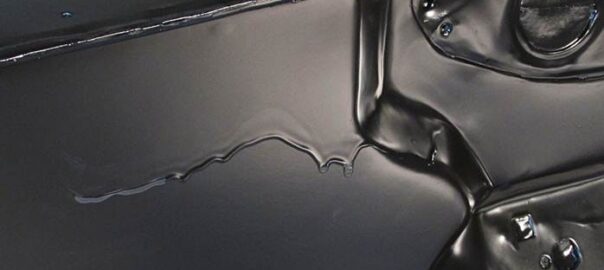
The influx of powder paint. Causes and ways to avoid them
Powder painting is one of the best ways to decorate metal products. Powder paint has the most advantages among all paints and varnishes and is the leader among the latest technologies in the field of coating. It has good functional properties and an attractive appearance. Powder paint lasts a long time, has resistance to corrosion, serves as a good addition to the interior at no extra cost.
The technology of applying powder paint is relatively simple, it combines three stages: cleaning, applying paint and its polymerization. But each of the stages can be broken down into billions of steps and important nuances that are worth remembering when working with this type of paint. There are many types of powder coatings, textures and colors. It can have high resistance to mechanical damage or higher resistance to ultraviolet light, have better anti-corrosion properties, or retain the same color even under the scorching sun. In general, you can choose, or combine everything. Anything is possible, if only strictly follow the rules and instructions, otherwise – in addition to the undesirable result in the form of a short-term use, you can get something else – defects on the surface.
Defects on the surface of painted products is a really visible and unpleasant problem, because even though it is just a layer of paint, any unevenness in the coating will be perceived by the buyer as a defect. He has the right to do this, because he pays money not for manufacturer’s mistakes, but for a quality product. Unfortunately, in our life there are enough cases when defects have spoiled our mood more than once. One of these is paint sags – the problem of uneven distribution of the coloring material over the surface. To find the root of the problem, you need to look a little deeper.
Paint sags defect
Paint sags visually spoil the appearance of the product, but they are even more dangerous because in places where the paint is too thick, or vice versa, it is not painted over enough, defects may occur that will affect the protective function. Decrease in adhesion, destruction of the paint film, its detachment, corrosion. Suppose paint sags are caused by a different amount of powder dispensed from a spray gun. We check the device, the settings. Everything indicates serviceability, but the paint is still fed in waves, or even clots. What’s wrong? The reason is paint reuse and recovery. This may surprise and lead to the question of what is the relationship between the recovered paint and the strength, the amount of powder supplied. And the connection is as follows.
Each spraying chamber is equipped with a powerful paint recovery system. It exists in order to absorb all paint residues that have not settled on the product, distill them through special filters and supply them again to sprayers for further painting. The system is undoubtedly beneficial. The only rule is to mix reconstituted paint and fresh paint in a ratio of 20% to 80%. The more recovered paint, the less the tendency of the total mixture before recharging. If you observe all the proportions, the coating will lay down evenly and there will be no problems. But this is not always enough to avoid the appearance of defects. What else can cause them?
Recovery: paint saving process or the reason for the damaged coating?
The recovery system is the process of returning unused paint back to the hopper, from which paint is fed to the sprayer. But it cannot cleanly absorb all the residues back without any additional action. But not everything is so simple. Particles that were already flying around the product could collect dust and dirt. If you don’t get rid of this, there will be problems with recharging the paint. In this system, the paint, flying past, settles on the filter cylinders, through which it enters a special container, where it is freed from the previous charges by pneumatic impact methods and poured into the hopper with the coloring powder. Of course, first it passes through the built-in vibrating sieve, which serves to remove dust. Getting into the hopper, the paint cannot simply be in a stationary state, because this will lead to its sticking and damage. Therefore, such a bunker will definitely be equipped with a fluidization system. And this is where the important process of paint preparation takes place, due to mistakes in which problems with its application can arise.
What is fluidization and what role does it play in paint application?
Fluidizing refers to loosening or fluidizing paint. It must be kept in this state at all times until it enters the gun and is sprayed. Fluidization contributes to the uniform supply of paint, since being in the moving air currents, the paint is mixed and does not stick together. It does not form clumps and moves freely after being charged. In the absence of filtration and fluidization, the process of applying the recovered paint is impossible.
How to determine if the fluidization hopper is malfunctioning?
We have already found out what consequences the disruption of the fluidization tank will have. Now the question is how to get rid of it. First of all, the reasons for uneven paint supply related to the fluidization process can be as follows:
- fluidizing plate pores clogged
Air supply systems for loosening paint consist in the fact that air is supplied through small holes. It’s all very much like boiling water in a saucepan. Air pushes certain masses of paint, thereby causing it to constantly move and mix. But since we are now talking about industrial processes, it often happens that these holes can be clogged with different oils from the air supply system, or due to excessive humidity. You should pay attention to this fact and always have a variable plate.
- paint moisture
This reason lies precisely in non-compliance with storage conditions. If there is high humidity in the room, it can penetrate the paint. Then the fluidization will not cope with the loosening and the paint will adhere precisely long before being fed into the spray gun. In order to prevent this from happening, in the presence of high humidity, you need to dry the paint before loading it into the tank. It can also be dried by the actual fluidization process. You just need to devote a little more time to this – 15-20 minutes, without transportation and spraying on the product.
If everything is normal with the fluidization processes, you can see the following reasons for uneven powder flow:
- Insufficient air supply pressure to the unit;
- Leaky connections during powder paint supply;
- Incorrect air supply settings.
As we can see, even a small detail can ruin all our work. Therefore, you should always check all processes and do not neglect the application instructions.